
Consultancy & Projects
When direction is clear but behavior does not shift, the issue is rarely capability or commitment. It is coherence. Strategy, structure and story are not reinforcing each other. Leaders sense the gap. Talent teams feel it in credibility. Performance reflects it over time. Closing that gap requires more than communication. It requires alignment at the level where decisions are actually made.
We help organizations with:
- strategy execution
- organizational culture
- employer branding
- employee value proposition (EVP)
- leadership alignment
- organizational design
- AI adoption
- cross-functional collaboration
- mergers and post-merger integration
- organizational transformation
Culture as a working system
At Dandelion Strategies, we treat culture not as a slogan or an engagement metric, but as the system that shapes how decisions are made, how accountability is experienced and how collaboration unfolds day to day. When that system supports the strategy, execution accelerates naturally. People act with clarity because the environment makes the right behavior easier. When it does not, even strong strategies slow down. Teams escalate instead of act. Incentives pull in different directions. Leadership signals shift under pressure.
Our role is to make those patterns visible and adjust them so that the organization’s direction is reinforced by its daily reality. This is the focus of our work on making strategy work.
Where employer brand fits
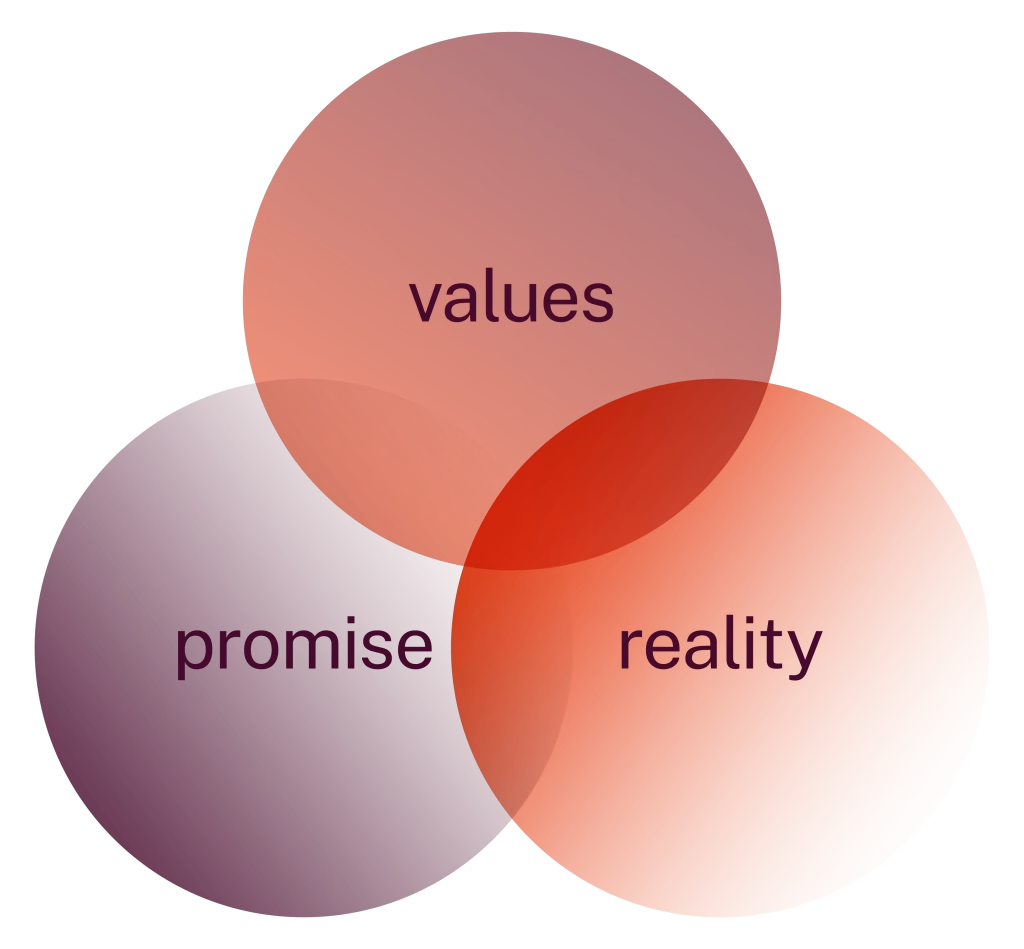
Culture, story and employer brand are inseparable. Many organizations first approach us with an EVP or employer brand question. Often the initial focus is messaging, but the real leverage lies deeper. Is the promise credible internally? Do performance signals reinforce what is being communicated? Are leaders modelling what the organization says it stands for?
We see employer brand as a strategic mirror of culture. It should reflect how the organization truly operates, not compensate for structural misalignment. Read more about how we approach Employer Value Proposition development.
How we work
Every engagement begins with clarity about the problem that needs solving. Sometimes that means starting with the Culture–Strategy Audit to understand where operating friction sits before deciding on action. In other situations, the priorities are already clear and we move directly into focused work.
That work can range from defining or refining an EVP to supporting cross-country integration, clarifying decision rights, aligning incentives with new priorities or guiding leadership teams through moments of growth and change. The form differs; the objective remains consistent. We remove the structural friction that prevents strategy from translating into behavior.
Trusted by ambitious organizations since 2009
















We have partnered with organizations across Europe, Asia and North America, including Booking.com, Philips, BCG, Heineken, Backbase, Siemens Energy, GetYourGuide, FrieslandCampina, Fugro and bol. Our role varies from strategic advisor to embedded partner, depending on what the situation requires.
This work is rarely about launching something new. It is about understanding what already exists and deciding, deliberately, what needs to shift. We partner with organizations that are prepared to look beneath the surface. Leaders who do not want another program, but clearer alignment between ambition and everyday behavior. If you recognize the tension between intent and execution, it may be worth exploring what in the system makes that tension rational.
Every organization already holds the seeds of its future success in its people, stories and values.
We help you bring them to life.
Example engagements:
Our work varies in scope, but typically centers on strengthening the link between strategic ambition and everyday behavior. Examples include:
- Define or refresh core values and translate them into observable behaviors that guide decision-making and leadership action
- Clarify and validate your Employer Value Proposition (EVP), and integrate it across the talent experience
- Develop and implement an employer brand strategy aligned with business priorities and organizational identity
- Strengthening employer brand capability and operating models to support long-term growth
- Activate culture during growth, transformation or structural change to sustain performance and alignment
- Design and deliver internal storytelling frameworks that build belief, coherence and engagement
- Improve employee experience through strategic communication and key touchpoint design
- Develop a culture-led content ecosystem and career platform strategy that attracts and retains the right talent
Choosing the right partner
Every organization has its own context, strategy and challenges. Rather than applying a predefined methodology, we start with the business challenge you’re trying to solve and identify the organizational conditions that influence the outcome. That may lead to work on strategy execution, organizational culture, leadership, employer branding or organizational design. The focus is always on helping the organization perform more effectively.
Many execution challenges are described as “culture problems,” but the underlying causes often lie in how decisions are made, how collaboration is organized or how success is rewarded. We help organizations diagnose where the friction really comes from before recommending solutions.
The right starting point depends on the business challenge. Sometimes attracting talent is the priority. Sometimes the issue is leadership alignment, strategy execution or collaboration. Rather than starting with a predefined service, we start with the organizational challenge you’re trying to solve.
Yes. Organizations rarely approach us with a diagnosis. More often, they describe symptoms such as slow decision-making, inconsistent execution, collaboration challenges or difficulties attracting and retaining talent. Together, we identify what’s driving those challenges and determine the most appropriate approach.
Organizations facing execution, leadership, culture or talent challenges are often unsure where to start. Some situations call for employer branding or EVP work. Others require organizational design, leadership alignment or support with strategy execution. Rather than starting with a predefined service, we start with the business challenge and determine which approach will have the greatest impact.
These are closely connected rather than separate disciplines. A new strategy often requires different ways of working. Culture influences how people interpret and act on that strategy. Organizational design shapes the conditions in which those behaviors take place. The right starting point depends on the challenge you’re trying to solve, not on a particular consulting label.
Yes. Organizations rarely come to us with a diagnosis. More often, they describe symptoms: inconsistent execution, slow decision-making, collaboration challenges, difficulty attracting talent or a strategy that isn’t translating into daily practice. Our first step is understanding what’s driving those challenges before recommending an approach.
Absolutely. We regularly work alongside executive teams, HR, communications, transformation offices and specialist consultancies. Our role is not to replace existing expertise, but to help connect strategy, leadership, culture and employer branding where those disciplines need to reinforce one another.