Skip to content

Insights

Thinking behind the work

Strong strategy is built on clear thinking.

This is where I share the perspectives, frameworks, and lessons shaped by years of working on culture, employer brand, and transformation.

Not quick tips or trends.
But ideas that change how organizations design, decide, and execute.
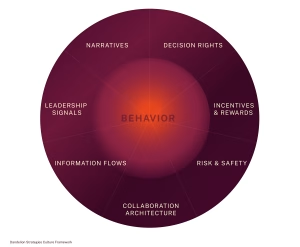
Culture as a system

Featured article:

Most strategies don’t fail because they are wrong. They fail because culture quietly rewrites them in execution.

In this article, I explain why culture is not a values exercise but a system of decisions, incentives, and signals and how leaders can design that system deliberately. Read more
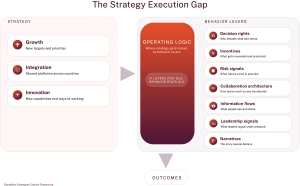
Strategy Execution Gap

Featured article:

Strategy fails when the organization’s operating logic keeps producing yesterday’s decisions.

This article shows how to treat culture as an operating system you can redesign, and outlines practical levers leaders can adjust to minimize the strategy execution gap. Read more

Questions you might have

A clear strategy is only the starting point. People still make decisions within the organization’s existing structures, incentives, leadership expectations and ways of collaborating. If those conditions continue to reward yesterday’s priorities, the strategy may change while everyday behavior stays remarkably consistent.

Before asking how to communicate the strategy more effectively, ask whether the organization has changed the conditions under which people make decisions.

Read more
When strategy changes but the organization doesn’t
Why your strategy will never succeed, until you design culture as a system

Agreement is important, but it doesn’t override the environment people work in every day. If incentives, leadership behavior, collaboration patterns or decision-making still reinforce previous ways of working, people will usually continue doing what has worked before.

That’s rarely resistance. It’s often the most rational response to the system they’re operating in.

Read more
How to build a culture as a system
When strategy changes but the organization doesn’t

A strong employer brand creates expectations. Whether those expectations are fulfilled depends on the everyday experience employees have after joining the organization.

When leadership, culture and ways of working consistently support the promise, employer branding becomes a competitive advantage. When they don’t, the gap becomes visible to employees long before it appears in recruitment metrics.

Employer branding and culture are not competing priorities. One shapes expectations; the other determines whether those expectations become reality.

Read more
EVP Reality Check
How to create an EVP people actually experience

Most organizations try to change culture by changing mindsets, values or communication. Those can help, but they rarely change everyday behavior on their own. Lasting culture change happens when the conditions that shape decisions and behavior also change.

Read more
How to build a culture as a system
Why your strategy will never succeed, until you design culture as a system

Strategy sticks when people can consistently translate it into everyday decisions. That requires more than communication. It requires leadership, decision-making, incentives and collaboration to reinforce the direction the organization has chosen.

Read more
When strategy meets the way the organization actually works
When strategy changes but the organization doesn’t

New ways of working become sustainable when they fit the way the organization operates. If people are expected to behave differently while the underlying structures still reward old behaviors, adoption will remain slow. The goal is not simply to encourage different behavior, but to redesign the conditions that make it possible.

Read more
How to build a culture as a system
Why culture change fails and communication isn’t the fix

Successful AI adoption depends on more than technology. Organizations also need to consider how decisions are made, how work is organized, how leaders role-model new behaviors and how people collaborate. Preparing for AI is as much an organizational challenge as it is a technical one.

Read more
How to build a culture as a system
When strategy changes but the organization doesn’t

Cross-functional collaboration is often seen as a communication challenge. In practice, it is usually a design challenge. When teams have different priorities, unclear decision-making, competing incentives or fragmented information, collaboration becomes harder regardless of how motivated people are.

Improving collaboration starts with understanding where friction occurs. Clear decision rights, aligned incentives, shared priorities and leadership that reinforces collaboration create the conditions for teams to work together more effectively. The goal is not more coordination, but less unnecessary coordination.

Read more
Strategy as a multi-instrument symphony: why strategy = collaboration
Why your strategy will never succeed, until you design culture as a system

A strong employer brand is built on more than a compelling message. It reflects the experience employees have every day. When the promise made to candidates matches the reality of working in the organization, employer branding becomes a powerful driver of attraction, engagement and retention.

That is why we see employer branding, EVP, leadership and organizational culture as connected rather than separate disciplines. A credible employer brand starts with understanding what makes your organization distinctive and ensuring that the way people lead, collaborate and make decisions consistently supports that promise.

Read more
The Employer Brand Promise and the Culture System
How to create an EVP people actually experience
Employer Value Proposition that works